
Project Description

Detroit: Sustaining a Community through Challenging Times
When people think about Detroit today, they think of the Motor City – for good reason. Since the early 20th century, the automobile industry has been the base of this city’s economy. But it wasn’t always this way. As the 21st century economy continues to change, what can Detroit tell us about adaptation to keep a community sustainable?
Adapting an Economy to Changing Technology
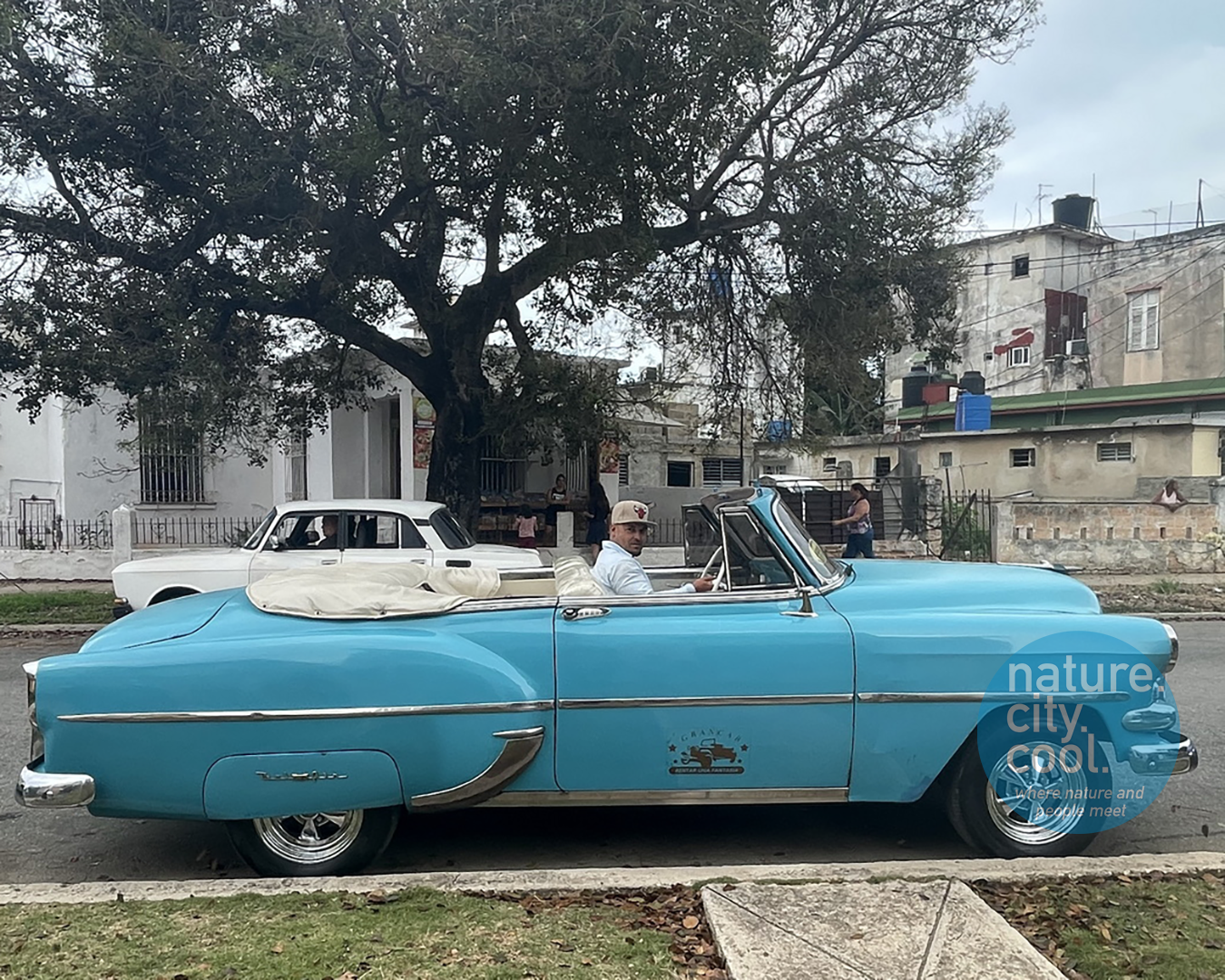
This 1954 Chevrolet Bel-Air Cabriolet is still going strong … in Havana
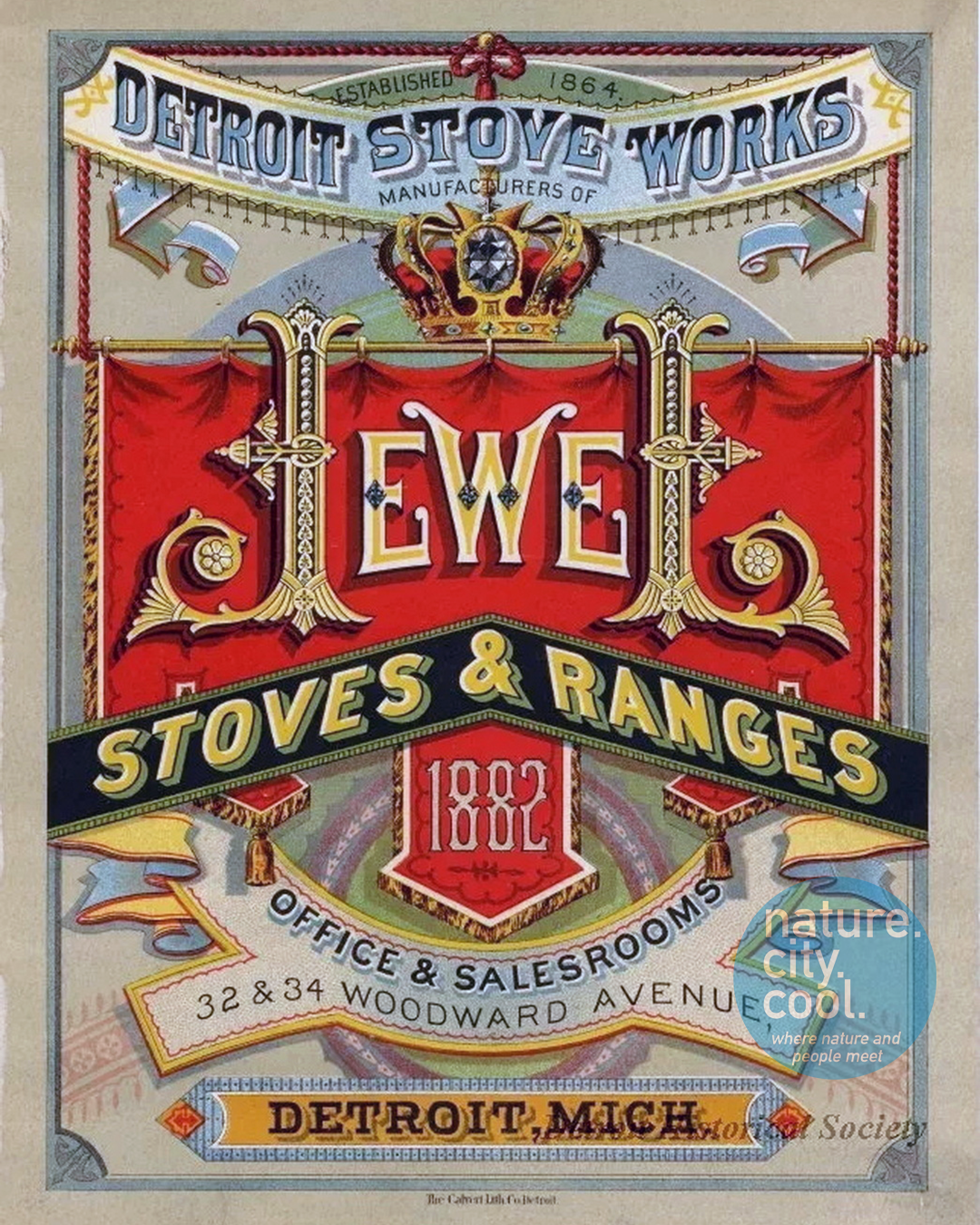
The Jewel Stove was an early Detroit technological innovation
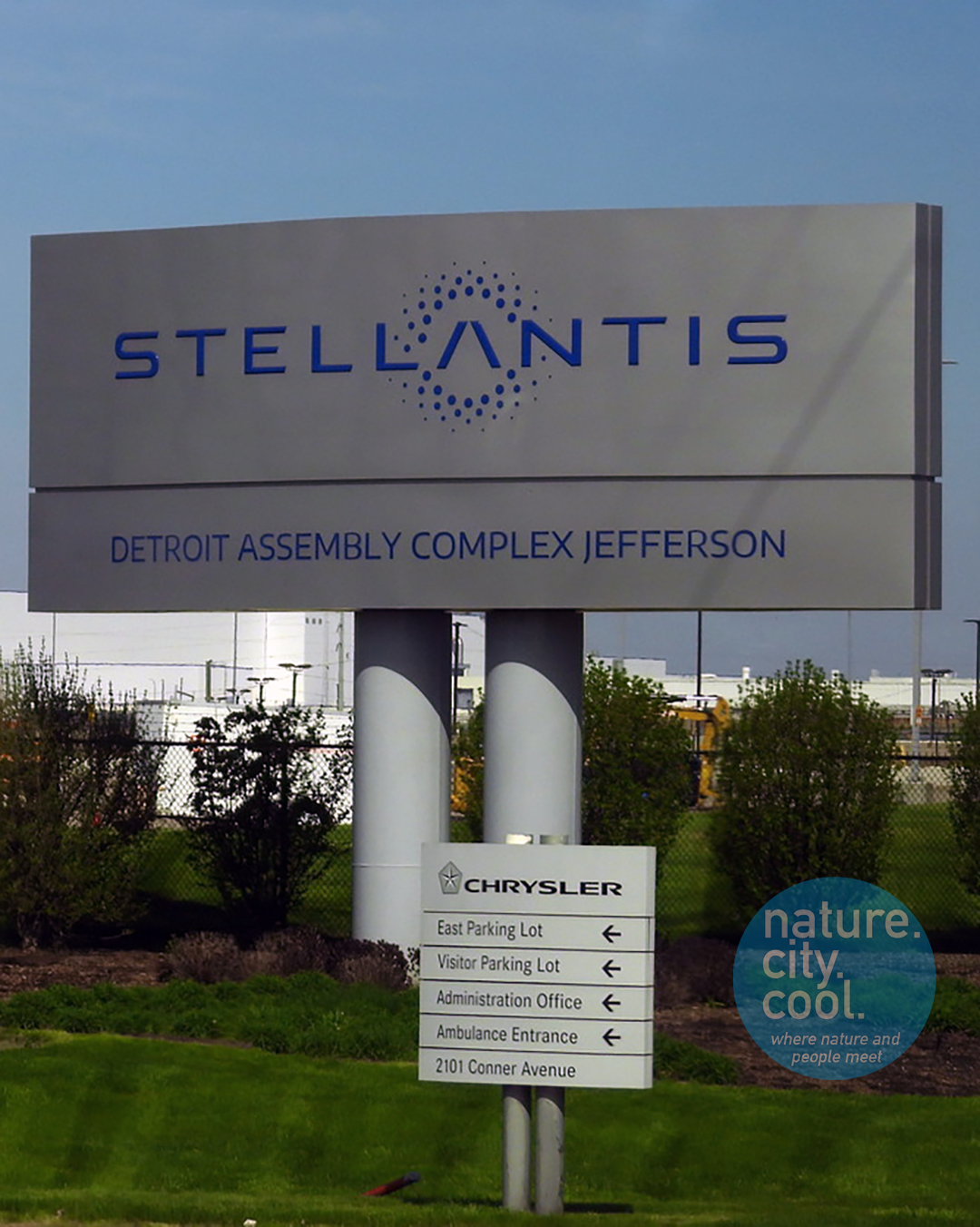
Detroit Assembly Plant – Jefferson is a 3 million square foot facility producing Stellantis’ Jeep Grand Cherokees
Soon after Michigan became a state in 1837, discovery of iron ore in the Lake Superior region saw the growth of mining as a major economic force. Detroit became a center for iron smelting and manufacturing. One of the first industries to build on these assets was not automobiles, but stove manufacturing. The Detroit Stove Works, incorporated in 1864, was an early innovator in the design of cast-iron gas stoves, first for heating and then for cooking. At one point, they had 1,400 employees, offered 700 designs and built 80,000 stoves annually. The “Jewel” stove was their main brand.
The knowledge and foundry expertise from this industry gave Detroit a foundation for manufacturing railroad cars, which in turn led to its dominance in automobile manufacturing. Detroit adapted successfully by building on its technical strength and innovation, not by staying focused on a specific industry.
After it was the stove manufacturing capital of the world, Detroit was the leader in production of rail and trolley cars.
Next it was the center of the automobile industry and the headquarters of the Big Three automobile manufacturers. But starting in the 1970’s, imported vehicles took a larger share of the US market, and other dynamics caused the industry to decentralize, moving to locations in other parts of the US. In 2023, Michigan as a whole still had the largest share of automobile jobs in the nation, but it accounted for only 10% of these jobs in the US.

E2 report on clean vehicles

CompTIA report on tech employment
As energy and mobility needs continue to change, Michigan has used its expertise to become a leader in newer technologies. In 2024, the non-profit E2 found that the state ranked second in the nation for jobs producing clean vehicles (hybrid, plug-in hybrid, battery electric, and hydrogen fuel-cell vehicles). Transitioning from the technology for new forms of vehicles to new technology more generally, Michigan and Detroit are seeking to increase employment and investment in other forms of high tech. The Computing Technology Industry Association (CompTIA)’s annual report on technology employment (jobs in the tech industry and tech jobs in other sectors of the economy) for 2024 listed Michigan as sixth nationally for the number of new tech businesses created the previous year.
Increasing jobs in the overall tech sector is one way Detroit and Michigan can achieve the adaptation they have in the past as technologies continue to change. But they have room for improvement here, ranking 21st (for Detroit) and 16th (for Michigan) nationally in the number of tech jobs. Expansion from this focus will be necessary if Michigan and Detroit are to enjoy economies that are sustainable over time. They must use their current expertise to adapt and become significant players in the technologies and industries of the future.
Responding to Population Decline
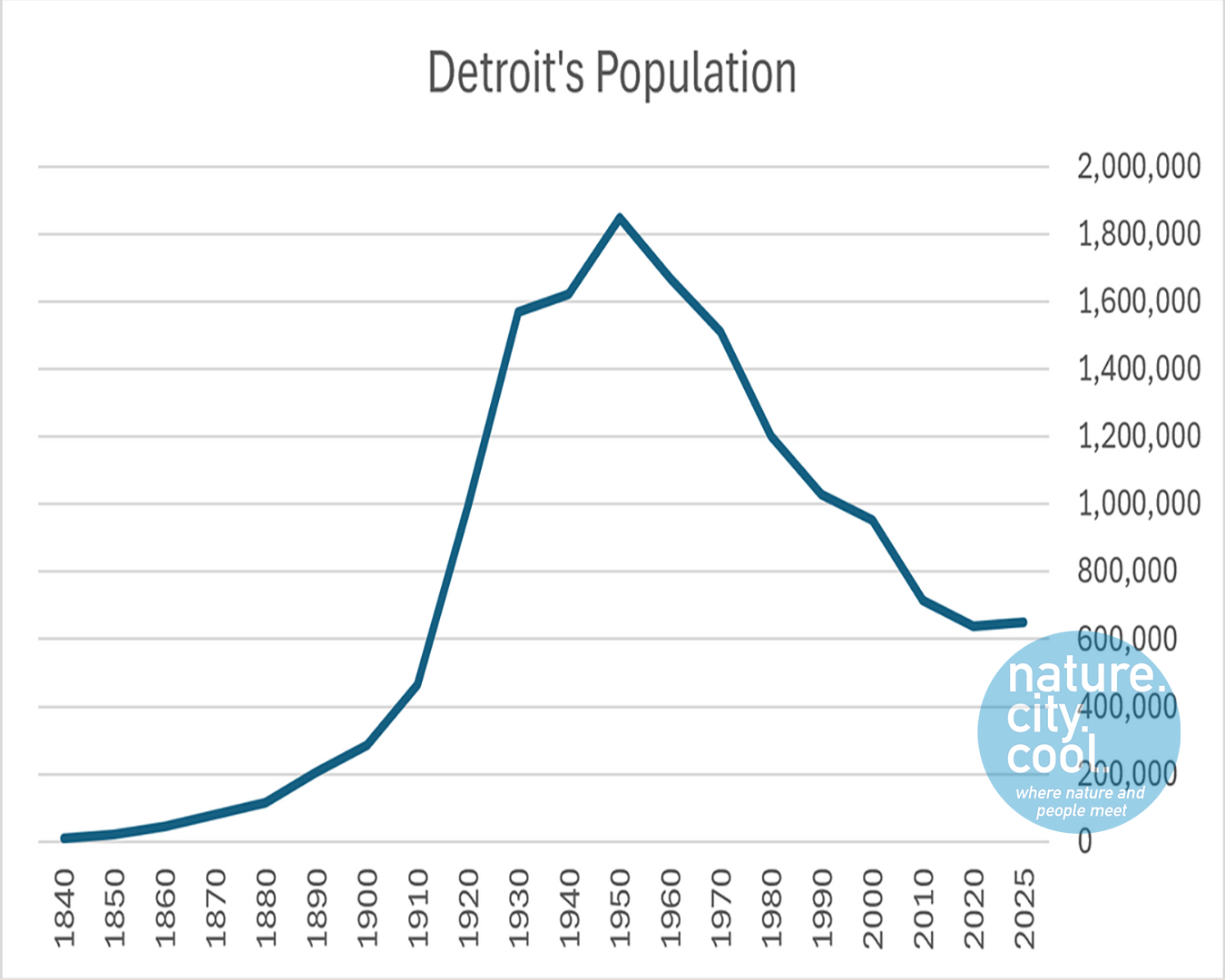
Detroit population, 1840 – 2025. Source: US Decennial Census
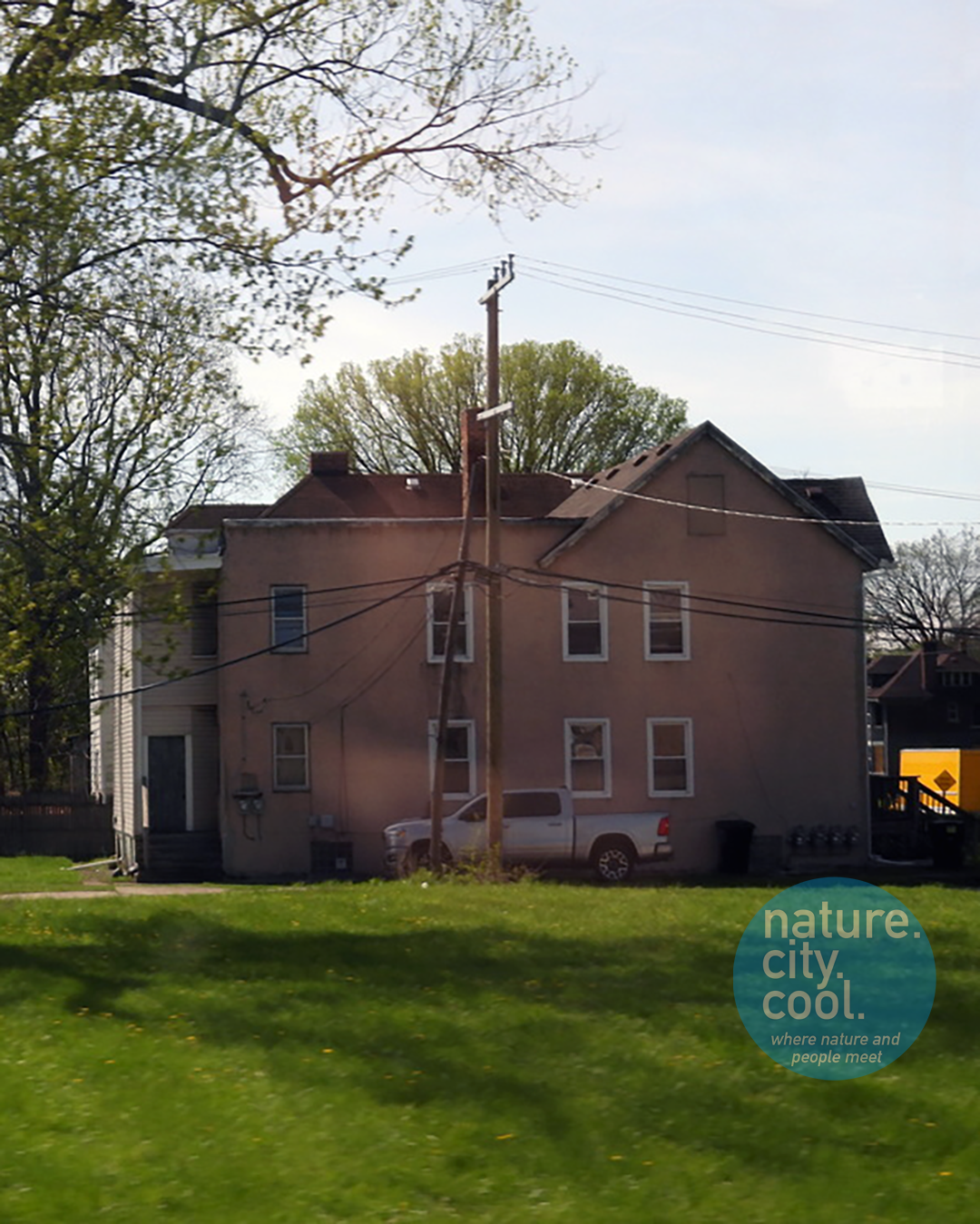
Large sections of residential neighborhoods have been abandoned
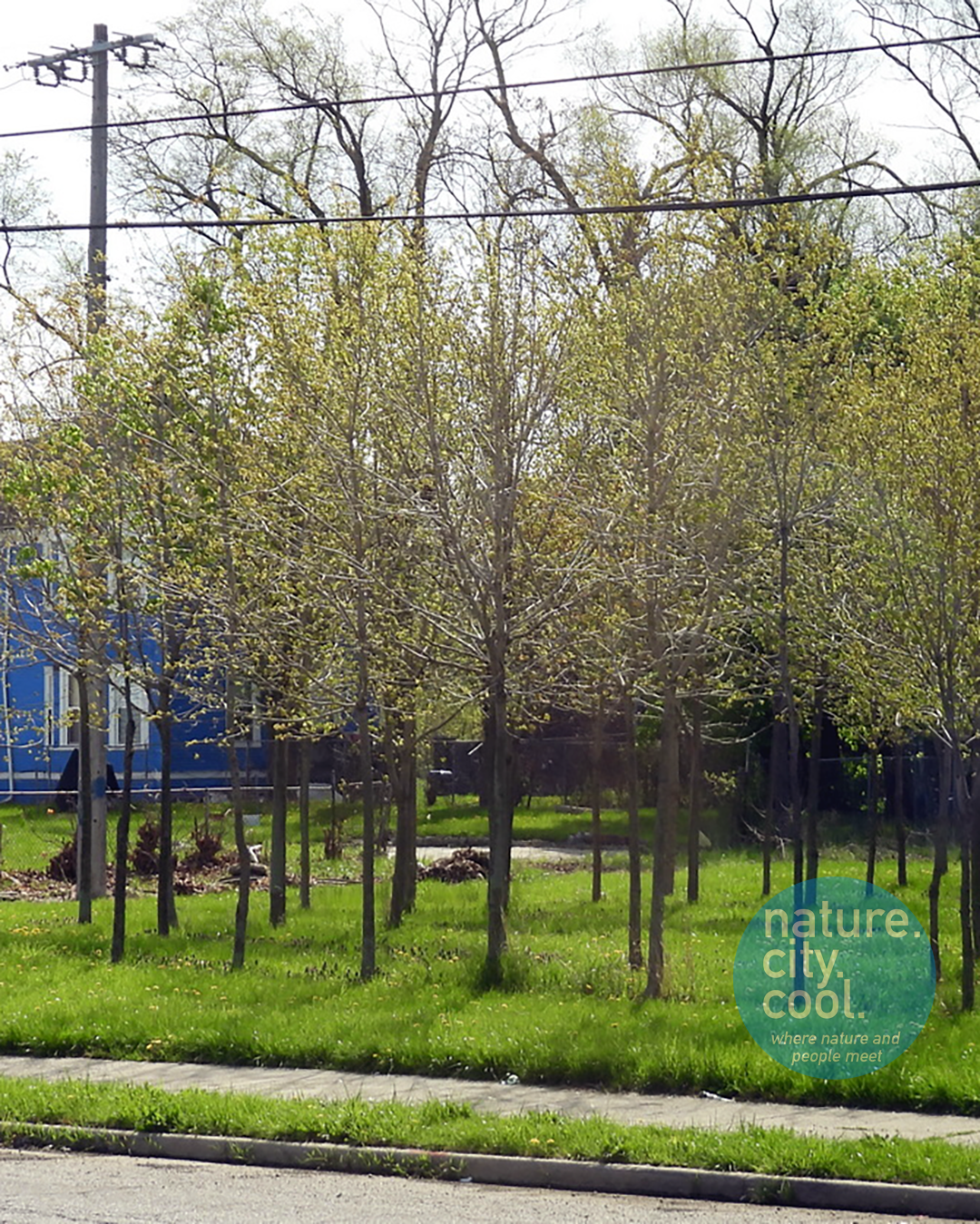
Part of a commercial tree farm in a formerly residential area
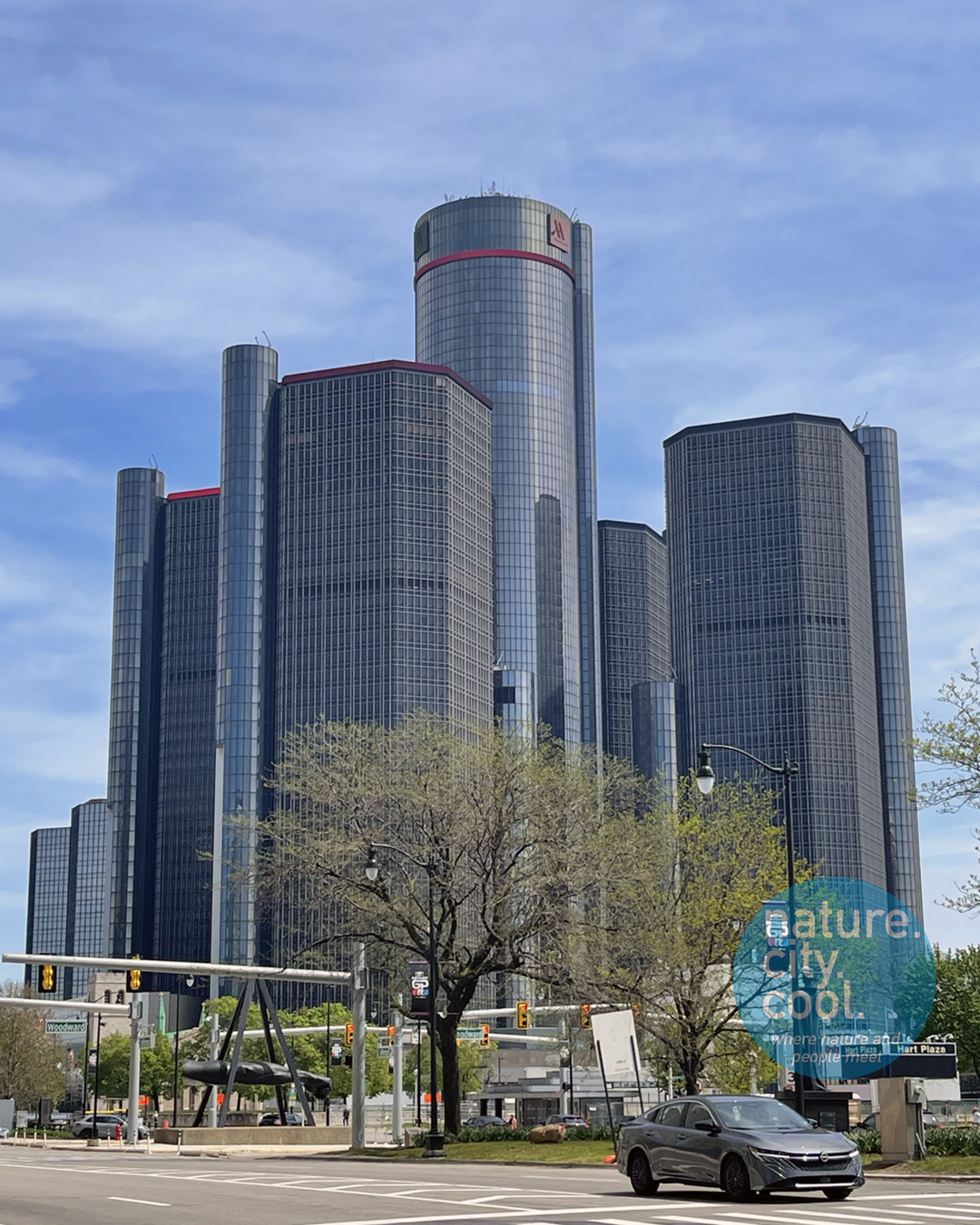
The Renaissance Center
For fifty years beginning in 1920, Detroit was the fourth or fifth largest city in the nation. That dominance gave it the resources to build major institutions and notable buildings. But things changed after World War II. From a peak of 1.85 million residents reported in the 1950 census, Detroit’s population dropped to a low of 639,000 in 2020. What can other communities learn from Detroit’s adaptation to this major drop in population?
The same national trends that affected most major American cities after World War II also impacted Detroit –white flight, decentralization and diversification of employment, Interstate highway investments, and bank lending practices that favored newer suburban communities. In addition, riots in 1967 and a reputation as a high crime city accelerated Detroit’s outward migration. Detroit became a majority-minority city in 1980. It filed for the largest municipal bankruptcy in US history in 2013. These realities, and continuing negative perceptions about the city, led to a population decline of over 550,000 from 1980 to 2020 – the largest for any city in the nation.
These big changes have caused Detroit to carry out larger changes to its community fabric than most other cities would consider. The large numbers of abandoned homes and vacant lots in some neighborhoods have led to their transformation from residential to urban agricultural use. Hantz Farms has been a leader in this effort since 2008. It has demolished or rehabilitated structures, planted tree farms and provided education and job training opportunities to nearby residents. The City and numerous non-profit organizations also support urban agriculture in Detroit. These include the Eastern Market, Greening of Detroit, D-Town Farm and others.
Just as few cities would chart a course to transform residential areas to agriculture, most would not entertain major restructuring of their iconic business center.
The skyline of the Detroit Renaissance Center (known as ‘RenCen’) is probably the most recognizable image of the city. The development project was originally intended to help counter the effects of the 1967 riots and revitalize the city. Opened in 1976, it covers 14 acres and includes over 5.5 million square feet of office, retail and hotel space. In 1996, General Motors bought the complex for its headquarters.
But the COVID-19 pandemic and changes in the economy have changed RenCen as well. GM moved its headquarters to Hudson’s Detroit in 2025. GM and its development partner, Bedrock Detroit, have released plans for renovation that would demolish two of the seven towers, convert one tower to residential use and make other significant changes. City and state assistance will be needed to carry out this renovation.
Both of these major transformations in Detroit respond to changes in the population and economy. They also move the city towards sustainability. The farms and agriculture support many aspects of a sustainable food system, and the RenCen renovation will better connect the area with the newly-revitalized Detroit Riverfront, a park designed with sustainability in mind.
Detroit illustrates that a sustainable city is not a static one. These big changes – which reshape significant parts of the city – also move it towards more sustainability, for the place and for its people and businesses.
Returning to Natural Ecosystems
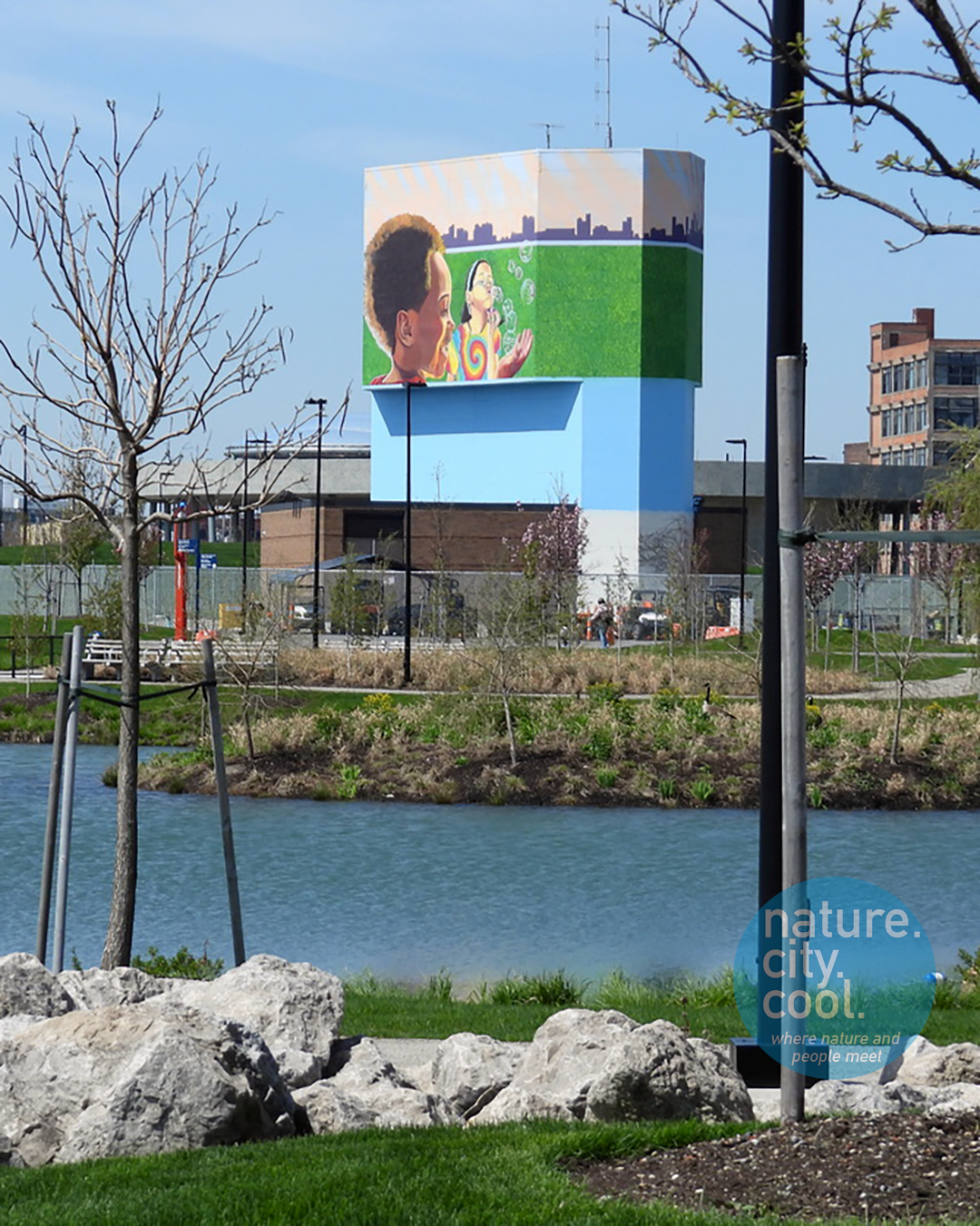
Ralph C. Wilson, Jr. Centennial Park
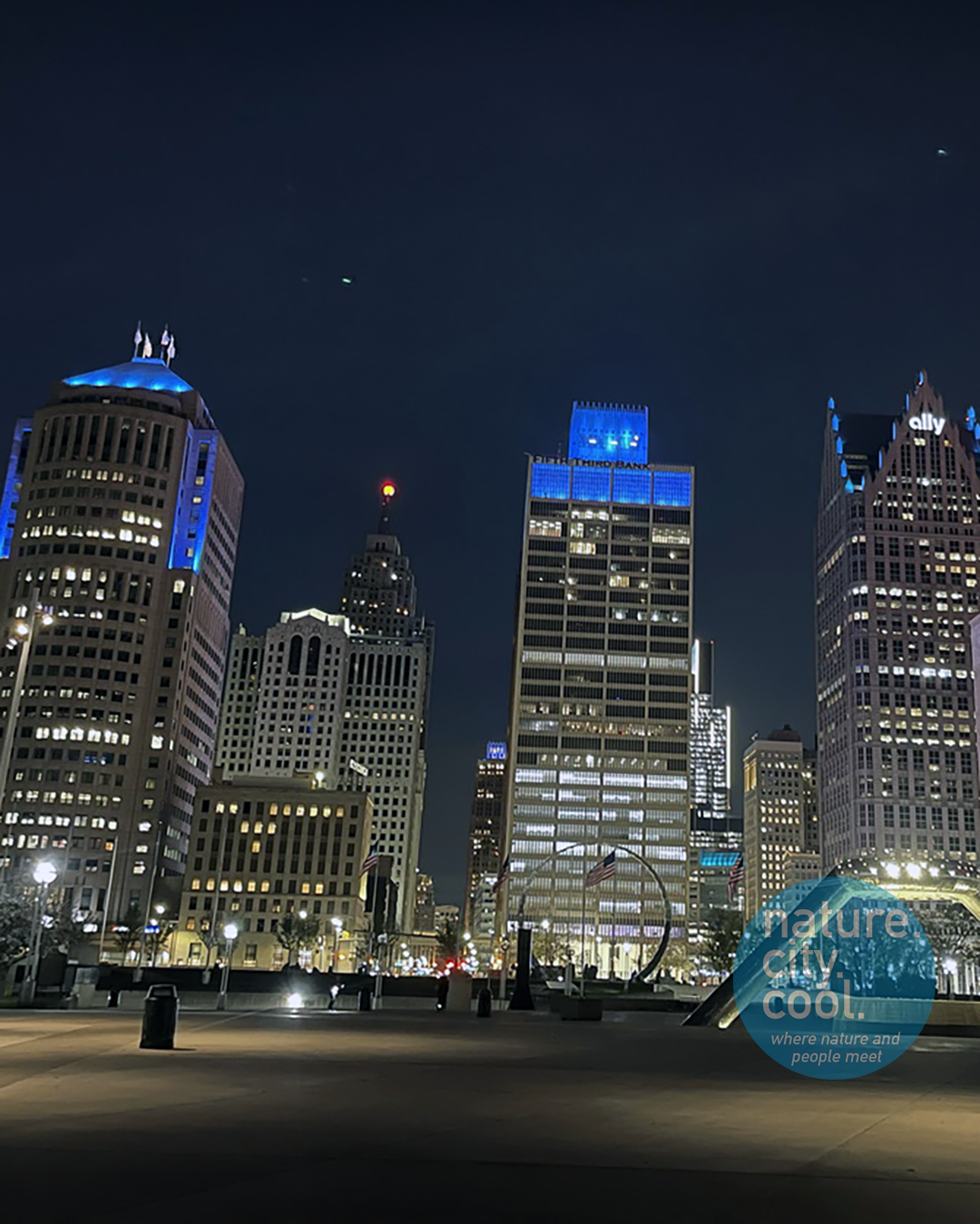
The Detroit Riverwalk and Downtown Detroit

Kayaking in Humbug Marsh Unit at the Detroit River Refuge – Photo credit: Ian Shive/USFWS
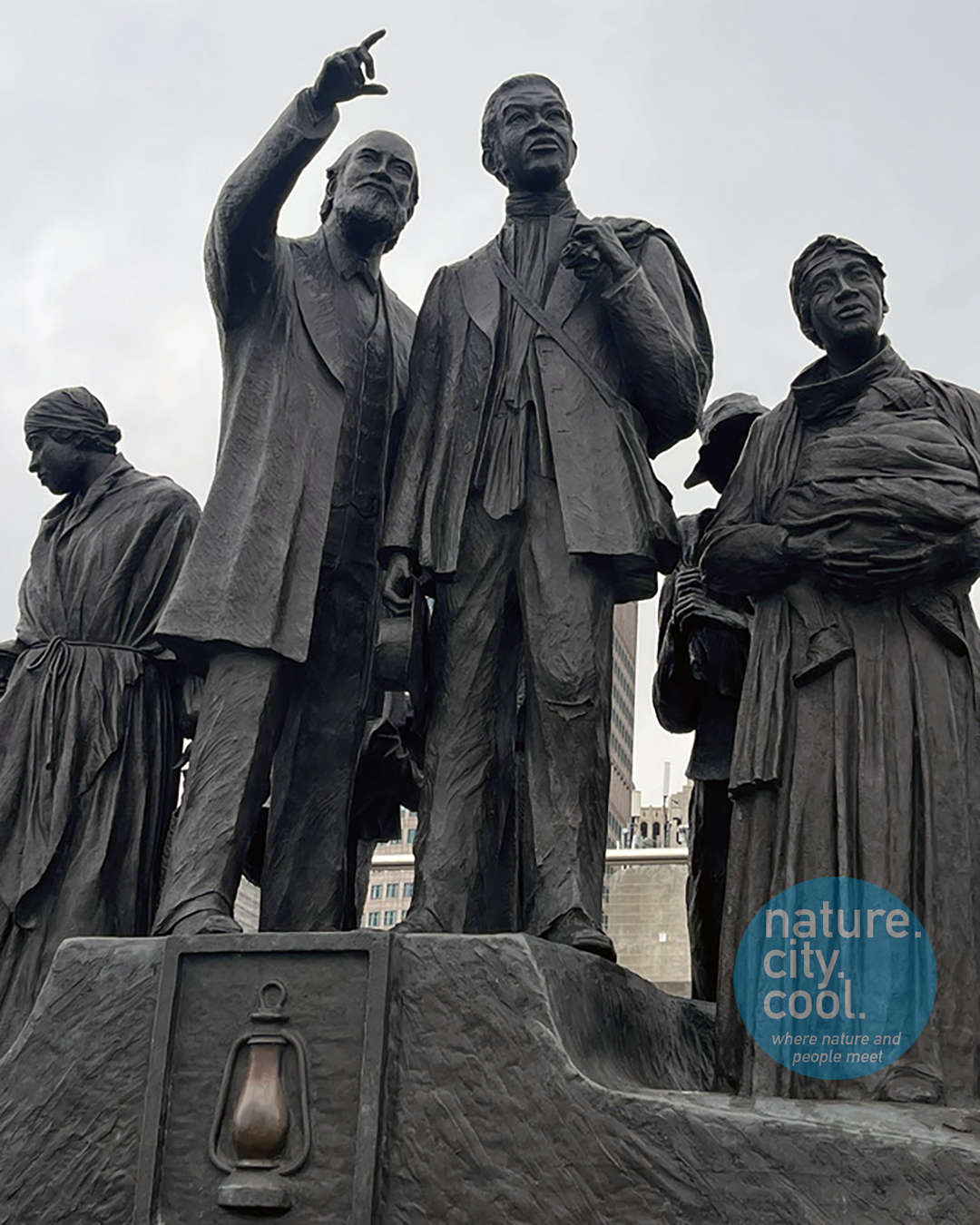
“Gateway to Freedom” sculpture by Ed Dwight celebrates Detroit’s role as one of the largest Underground Railroad terminals
In 1950, Detroit’s waterfront was like waterfronts in most major American cities – full of heavy industry and focused on shipping. The Renaissance Center brought a new office-oriented character to the waterfront in 1976, the result of initiatives to counteract the impacts of the 1967 riots. In 1981, the City of Detroit acquired the former Uniroyal property along the river, spending $8.6 million for the land, clearance and clean-up. Development for office, commercial and hotel uses continued along the waterfront, increasing the tax base and supporting business growth but without a particular focus on the natural environment.
In the more recent past, changes to the riverfront have begun to recognize the value of the natural areas and ecosystems. They offer examples of change towards sustainability that are particularly instructive because they occur in a cold climate and at a large scale.
In 2001, the Detroit River International Wildlife Refuge was created in this area. The only international wildlife refuge in North America, it occupies 7.88 square miles of coastal wetlands, islands and parks along 48 miles of the Detroit River and Western Lake Erie shoreline. It includes Humbug Marsh, a designated Wetland of International Importance. Its protection and restoration provide homes, food and resting areas for resident and migrating wildlife.
The Detroit Riverfront Conservancy was founded in 2003, with support from Kresge, General Motors, and the City of Detroit. Since then, it has spearheaded the construction of parks, trails, greenbelts and amenities for both residents and visitors. The Detroit International Riverfront extends almost five miles along the Detroit River and also includes three greenways that connect neighborhoods to the river. It has 3 million visitors annually, and 84% of Detroit residents have used the park within the past year, according to Conservancy information. This Riverfront was voted the best in the country by USA Today readers in 2021, 2022 and 2023.
Last year, an extension of the Riverwalk completed eight miles of trails along the river. Its design includes natural areas, information about the area’s role in the Underground Railroad and a variety of activities for people of all ages.
The Detroit River and the Great Lakes continue to play an important role in shipping and industry. But their natural ecosystems and recreational areas increasingly contribute to a healthier and more sustainable place that’s also very cool.
Gaining Strength from Diverse Communities
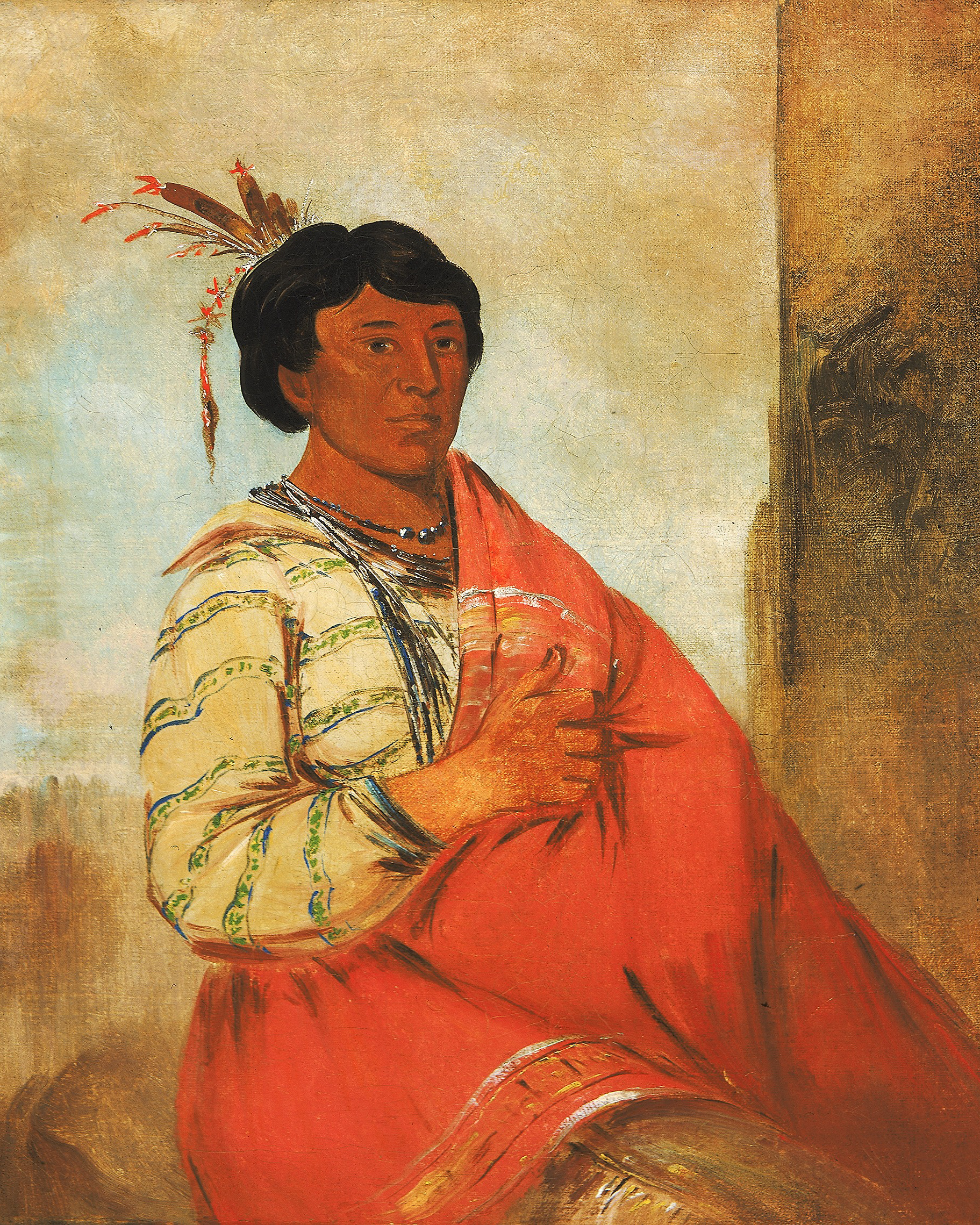
He Who Halloes was a member of the Ojibwe/Chippewa tribe. Portrait by George Catlin at Sault Ste. Marie (in today’s Michigan), 1836. Credit: Smithsonian American Art Museum, Gift of Mrs. Joseph Harrison, Jr.
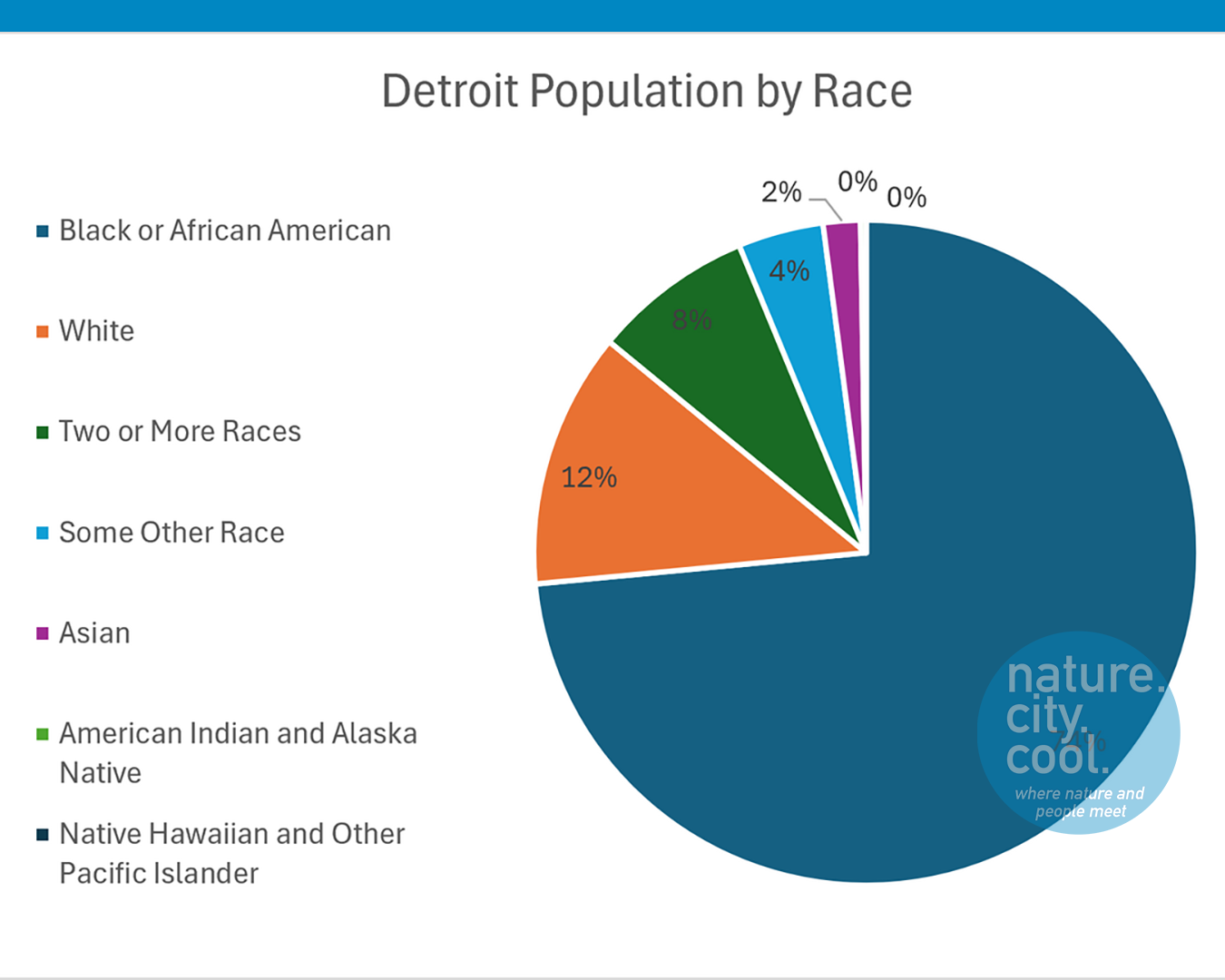
Racial Distribution of Detroit Population, 2024. Source: US Decennial Census
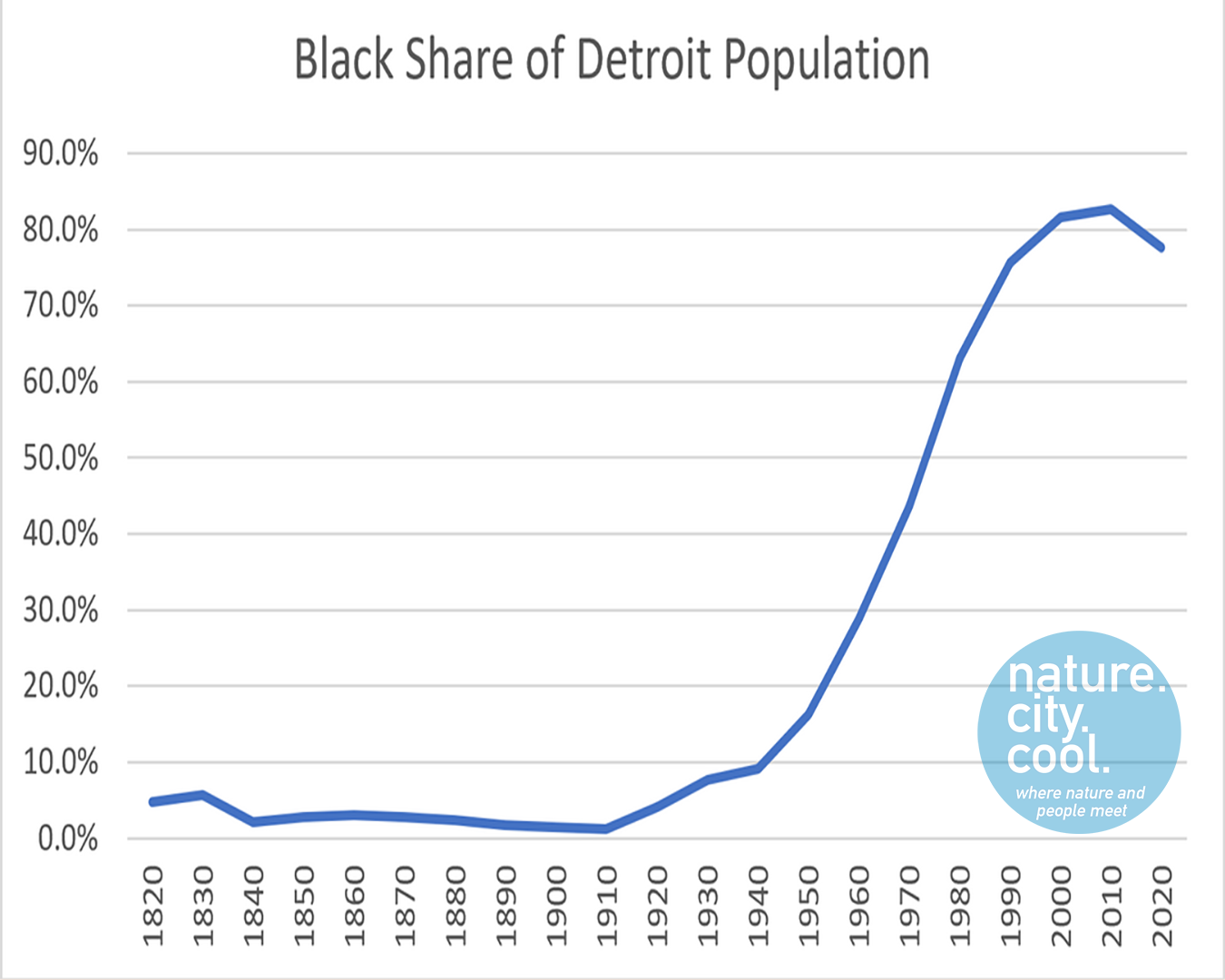
Black Share of Detroit population, 1820 – 2020. Source: US Decennial Census

City initiatives for revitalization
Residents of the American Midwest or “Rust Belt” are often imagined as White descendants of various European ethnic groups. Detroit’s culture today is a fascinating combination of the diverse communities who have made this place their home.
Indigenous peoples lived in the area that is now Detroit beginning as early as 11,000 years ago. The area is “the contemporary and ancestral homelands of three Anishinaabe nations of the Council of Three Fires: the Ojibwe, Ottawa, and Potawatomi”. Long before industry transformed the riverfront, these waterways sustained the Anishinaabe peoples whose deep relationship with the land and water helped shape the region for centuries.
The French Fort Detroit, established in 1701, focused on fur trapping and trade with Indigenous people. It was part of the French competition with the English, Dutch and Spanish colonists to dominate the ‘New World’. By the time it was established, the French had a long-standing relationship with the Indigenous empires in this part of the continent, having established small colonies in North America beginning in the 1500’s. Fort Detroit was the focus of extensive wars between these empires in 1716, with the Iroquois fighting other French Indigenous allies and endangering French colonial ambitions.
Today, Native Americans comprise only 0.3% of Detroit’s population. But their role in shaping the community has long been reflected language, with words such as moose, moccasin and chipmunk. Many place names also originate in the language of the area’s Anishinaabe people. Recognition of their heritage and traditional culture is now found through exhibits at the Detroit Historical Museum and signage in parks and public spaces. A unique exhibit at the Detroit Institute of Art Museum, “Contemporary Anishinaabe Art: A Continuation”, showcases the continuing artistry of these peoples; it closed this April.
In 1900, Black people made up only 1.4% of Detroit’s population. Detroit benefitted from the “Great Migration” of Blacks from the South to the North beginning in about 1910, and economic opportunities in the auto industry attracted many to the city. By 1950, about 300,000 Black people lived in Detroit, making up 16.2% of the population. But following the 1967 riots, economic downturn, and white flight, Blacks were 63.1% of the population in 1980.
Detroit is now one of the largest majority-minority cities in the United States. The American Community Survey for 2024 estimates that 73.5% of Detroit’s population was Black or African American. The White population is 12.4% of the total and 7.8% of the population are people of two or more races.
Black residents of Detroit have brought many aspects of global culture to Detroit – music, food, art and more. They have also faced discrimination and neighborhood destruction through urban renewal. Today, the public and private sectors are working to increase opportunities for Black Detroiters. Among the programs are the City’s “Rebuilding Black Wealth” initiative and the Black Leaders Detroit organization’s programs to connect black entrepreneurs with access to capital, support and opportunity. These efforts should improve quality of life and economic prospects for today’s residents and make the community more sustainable for the future.
A sustainable community thrives by embracing its diverse and changing population. By adopting and adapting the features of different cultures, a community can gain a broader perspective that allows it to be more flexible and consider a wider range of alternatives when responding to change over time. Today’s Detroit is a community seeking to follow this approach.
Experiencing the Cool Places
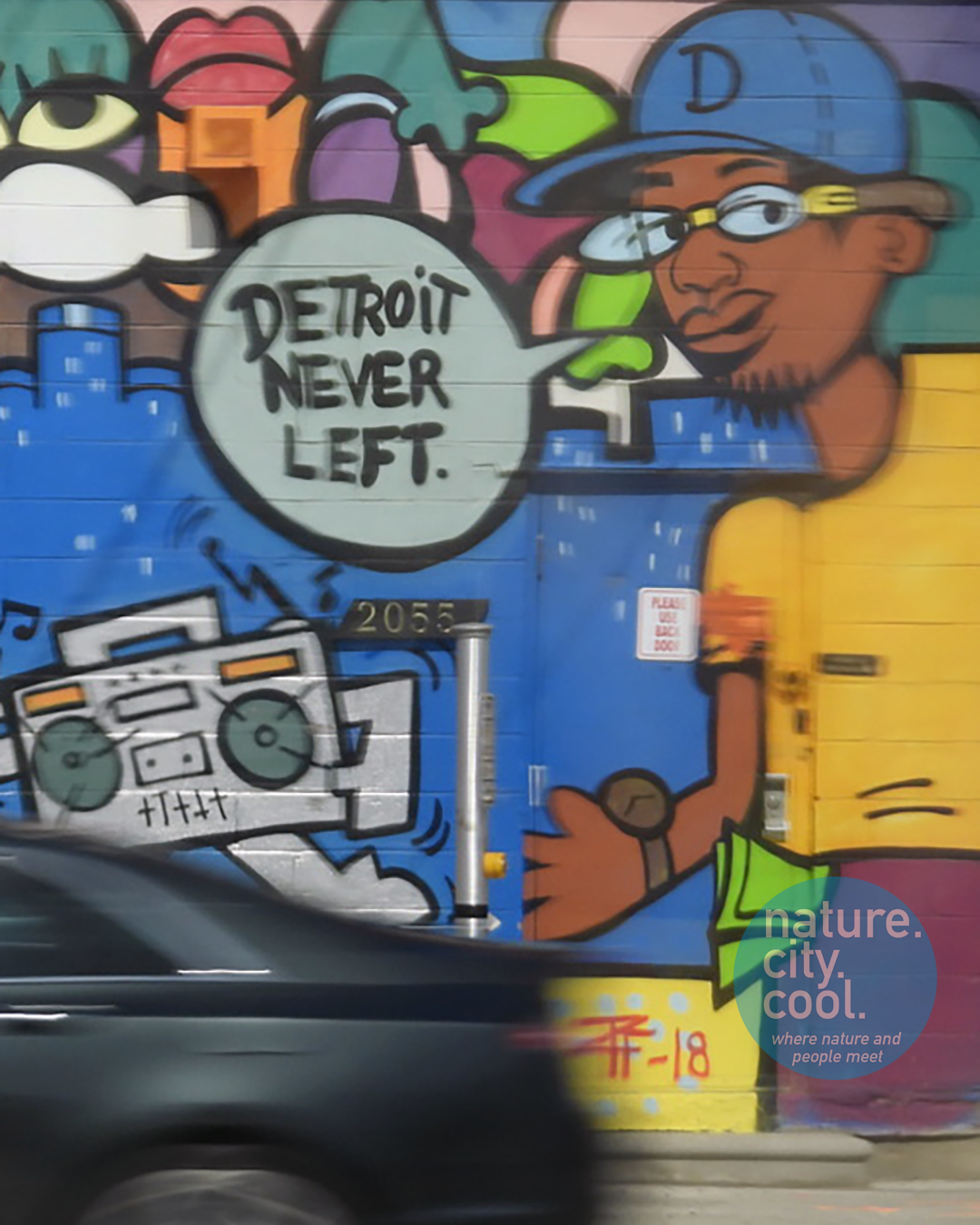
The mural celebrates the music … and the city
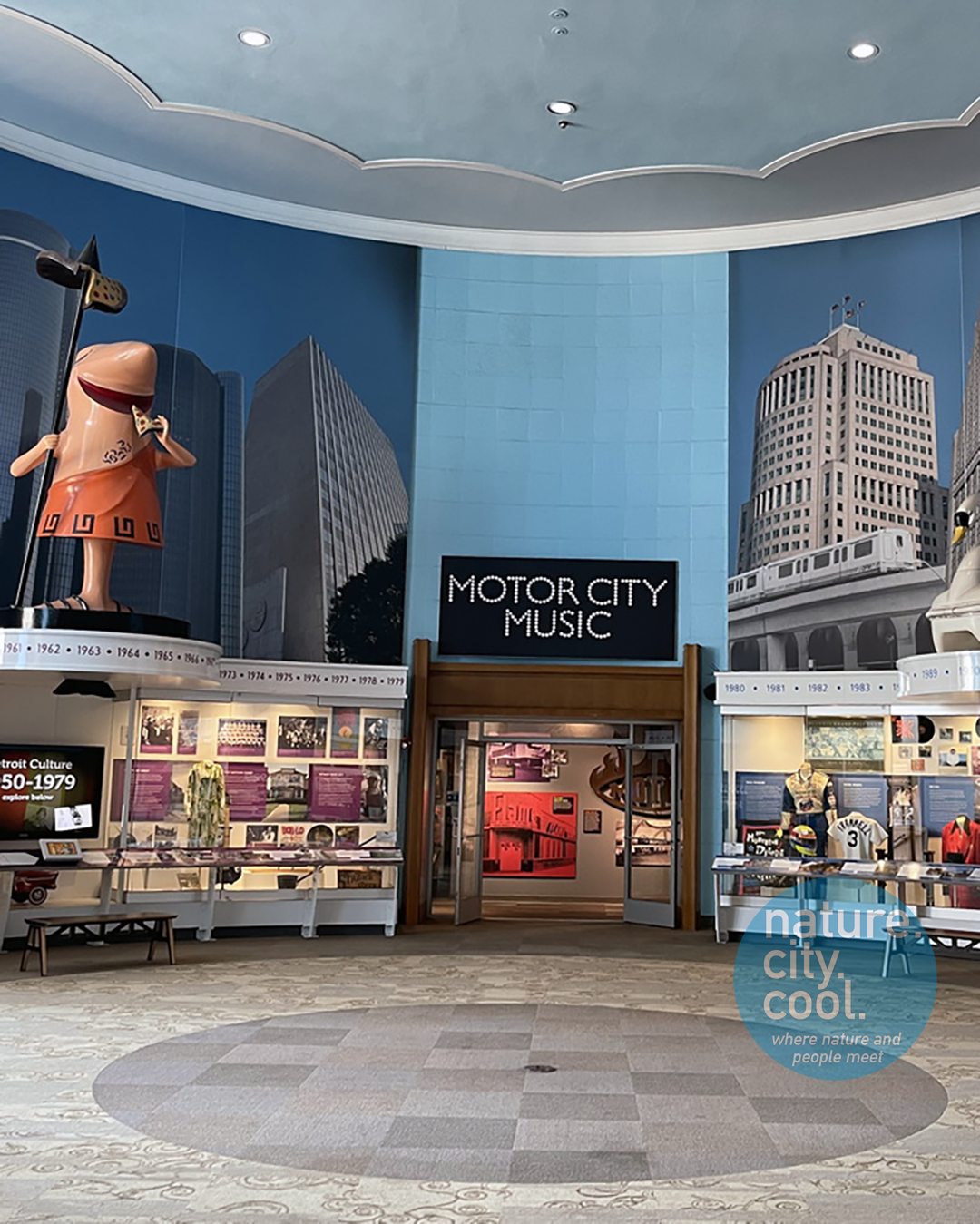
Motor City Music exhibit at the Detroit Historical Museum
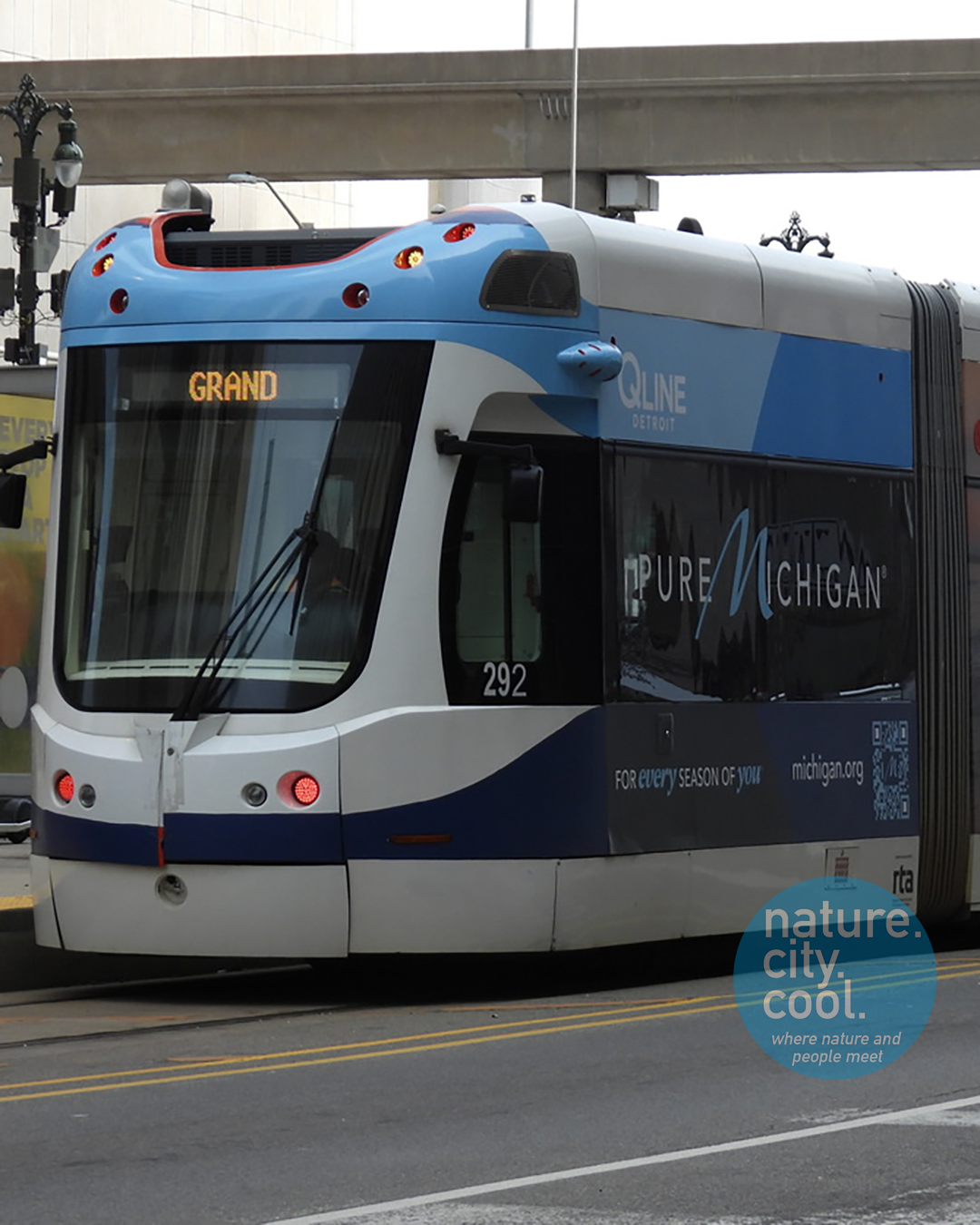
The QLine Trolley
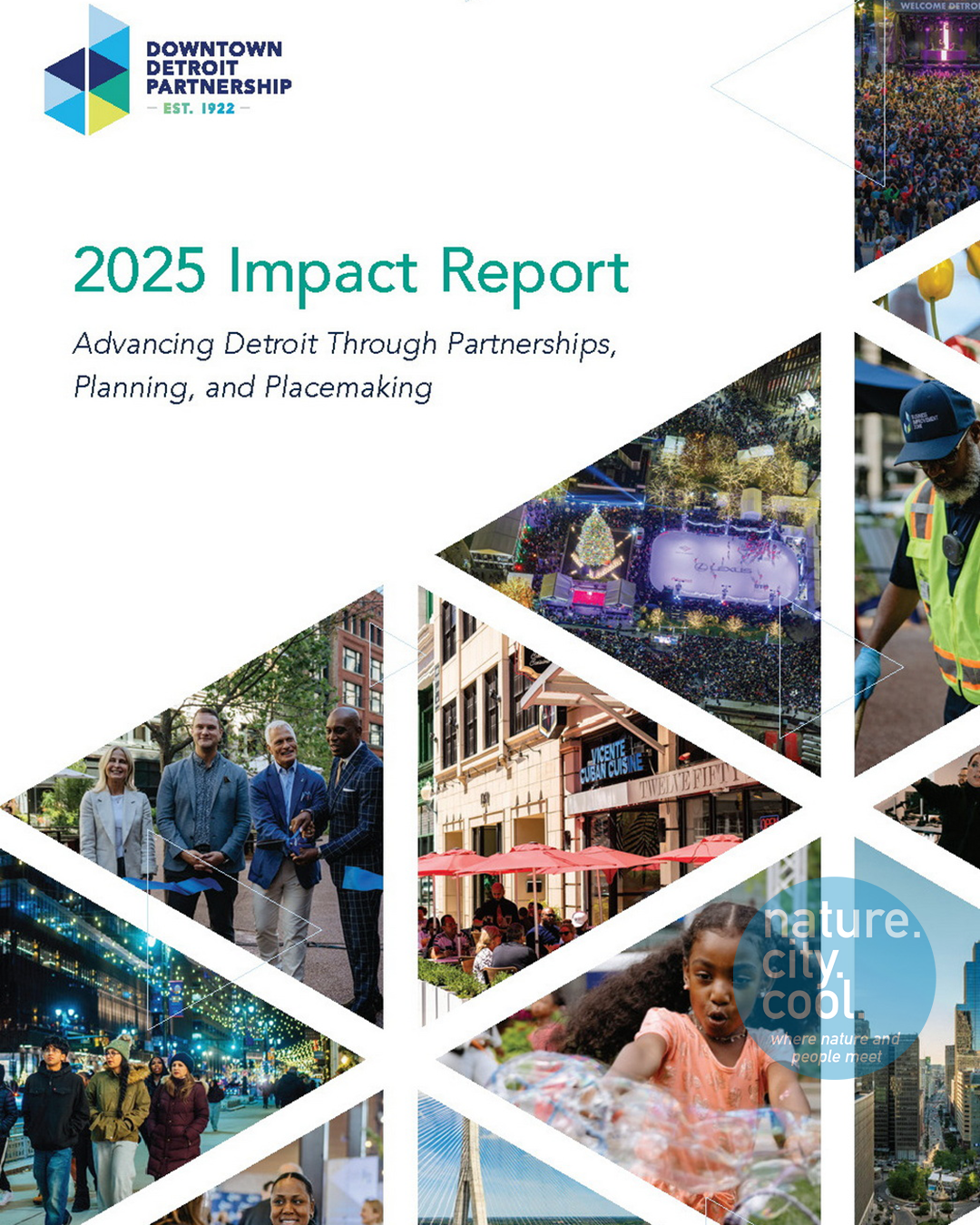
Reporting on Downtown progress
It’s hard to think of anything more cool than Motown! When a 29-year old Berry Gordy Jr. founded Motown records in 1959, he probably didn’t imagine the long-lasting and far-reaching impact the company, its musicians and their sound would have. Detroit was his home, and the home of the Motown sound. The company, the individual artists and musical styles have changed since those early days. But the connection between music and Detroit’s identity remains. It’s one of the features that give Detroit many cool and evolving places.
Today Detroit is full of music venues, musicians and music festivals that celebrate Motown and the other musical genres that have grown up here. In addition, two places tell the stories of the founding and the effects music has had on this community. The Motown Museum is housed where the music was actually made. It’s a showcase for that history, as well as a center supporting new young artists. Closed for renovation and expansion right now, it has an important place in Detroit’s past and future.
The National R&B Hall of Fame, housed at the Detroit Historical Museum, explores the role and contributions of the entire rhythm and blues genre. It includes costumes, artifacts and historical perspectives on the people who created this music. By sharing this history and continuing to recognize notable artists and contributors, the Hall of Fame helps sustain the future of the music.
In downtown Detroit, one of the striking features is the width of the major streets. They seem unusually wide, particularly in contrast to the relatively light traffic seen today. Reportedly designed in the 1950’s when continued massive growth and a centralized economy were assumed to be Detroit’s future, today they seem inefficient, daunting for pedestrians, and definitely not part of a sustainable community. Except for Woodward Avenue. Here, that extra-wide roadway has been redesigned. There is a wide median with shade, landscaping, pedestrian amenities and sidewalks that connect to cross-streets. In the travel lanes there is a trolley, the QLine. It’s free and runs 3.3 miles along one of the main routes in and out of downtown. Along the way, it provides service to many desirable destinations.
The QLine opened in 2017. Its name comes from Quicken Loans, whose owner was a major funder of the project (and other downtown development). Riders include downtown workers, families and school groups visiting museums, tourists and many others. An estimated $10 billion of new development has been attracted to this corridor since the QLine’s opening. Public transportation that’s free, easy and convenient is a great asset for cities seeking more sustainable mobility for residents and visitors.
There are places to visit on the QLine partly because downtown Detroit has seen impressive revitalization in recent years. According to the Downtown Detroit Partnership (DDP), in 2025 downtown Detroit had 6,831 residents, an average of 31,480 daily workers and 8.7 million visitors.
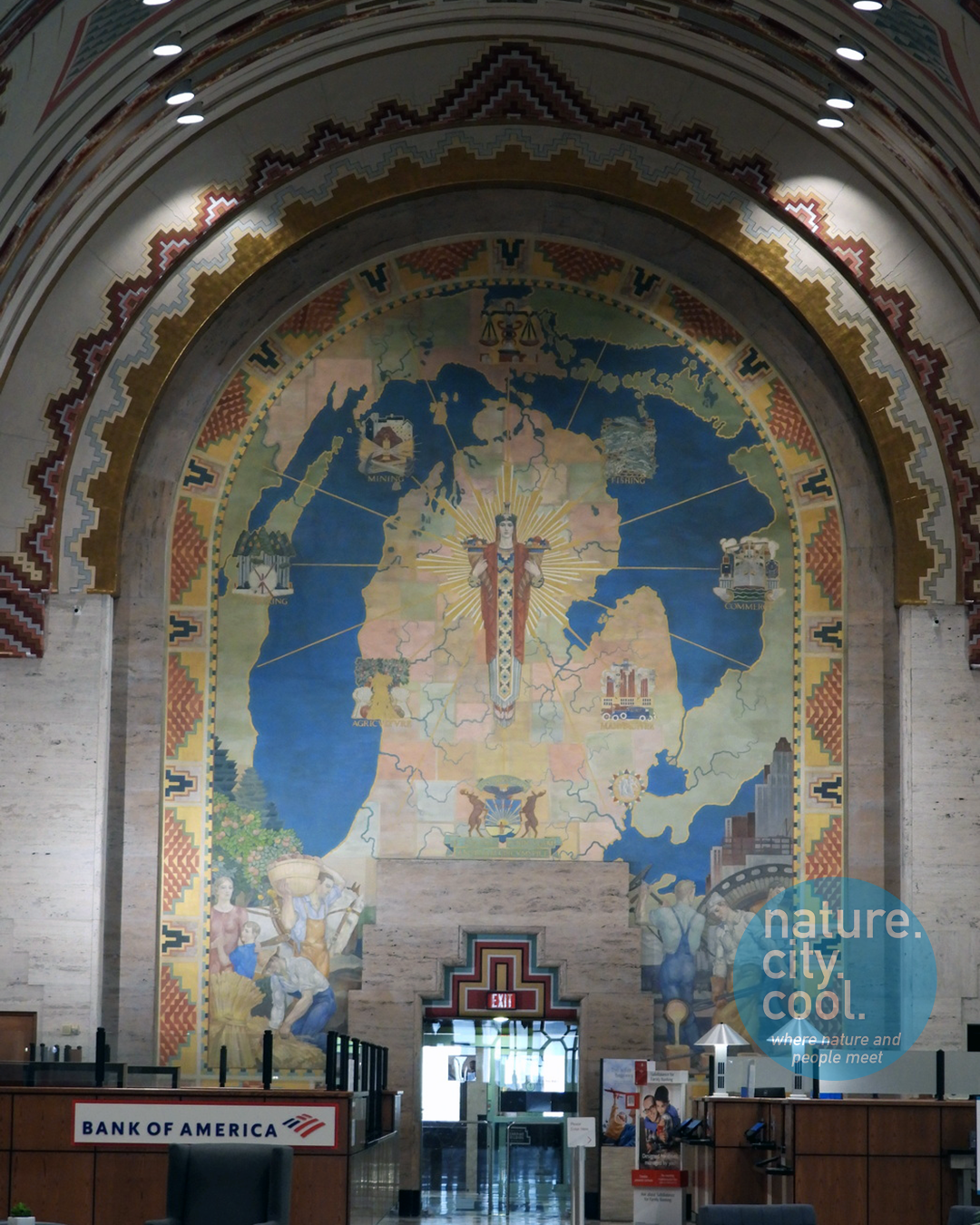
Art Deco details of Guardian Building, completed for the Union Trust Company in 1929
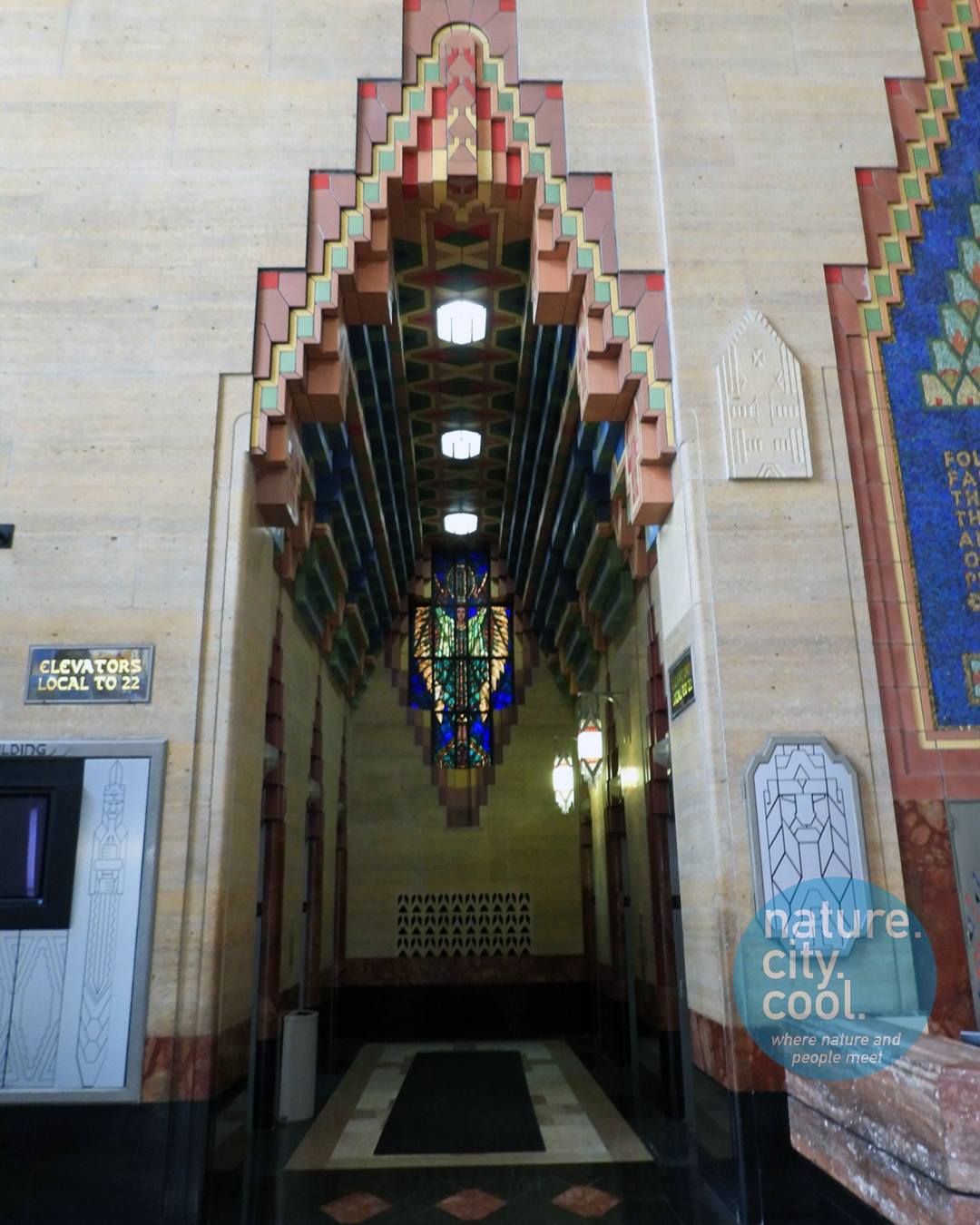
Art Deco details of Guardian Building, completed for the Union Trust Company in 1929
Public and private investment has restored many of the historic Art Deco buildings downtown and transformed them into mixed use developments. Bedrock, the development firm responsible for many of these projects, is part of the Rock Family of companies. Dan Gilbert began Rocket Mortgage in 1985 and has grown this family of companies to encompass many business areas. Its real estate investment is focused in Detroit and Cleveland. Bedrock states that, since 2011, it has “invested and committed more than $7.5 billion to develop and restore more than 140 properties, totaling over 21 million square feet of office, retail, residential, hospitality, industrial, data centers and parking.” The Gilbert Family Foundation is also actively involved in these communities.
A vibrant and successful center is one of the most important features a sustainable city can have. The density and infrastructure in and near downtowns represent significant past investment and offer opportunities to accommodate growth without further urban sprawl. But the character of that central area – its buildings, natural areas, design and connectivity – is critical in determining whether it can attract people and businesses as markets and preferences change over time. And after long periods of decline, visionary leadership by one or a few individuals is often key to shifting perceptions and redirecting investment back to the center. Detroit’s leadership and recent initiatives provide a surprising and positive outlook for a successful and sustainable future.
Resources


Tell us about that favorite spot. What’s the vibe that makes it so awesome? What’s fueling all that good energy?

Share insights from your experiences of designing, enhancing and transforming cool sustainable places.

Join the conversation. Keep up with the latest new stories, ideas and discussions.