
Project Description

Community Revitalization Through Art, Creativity, and Placemaking
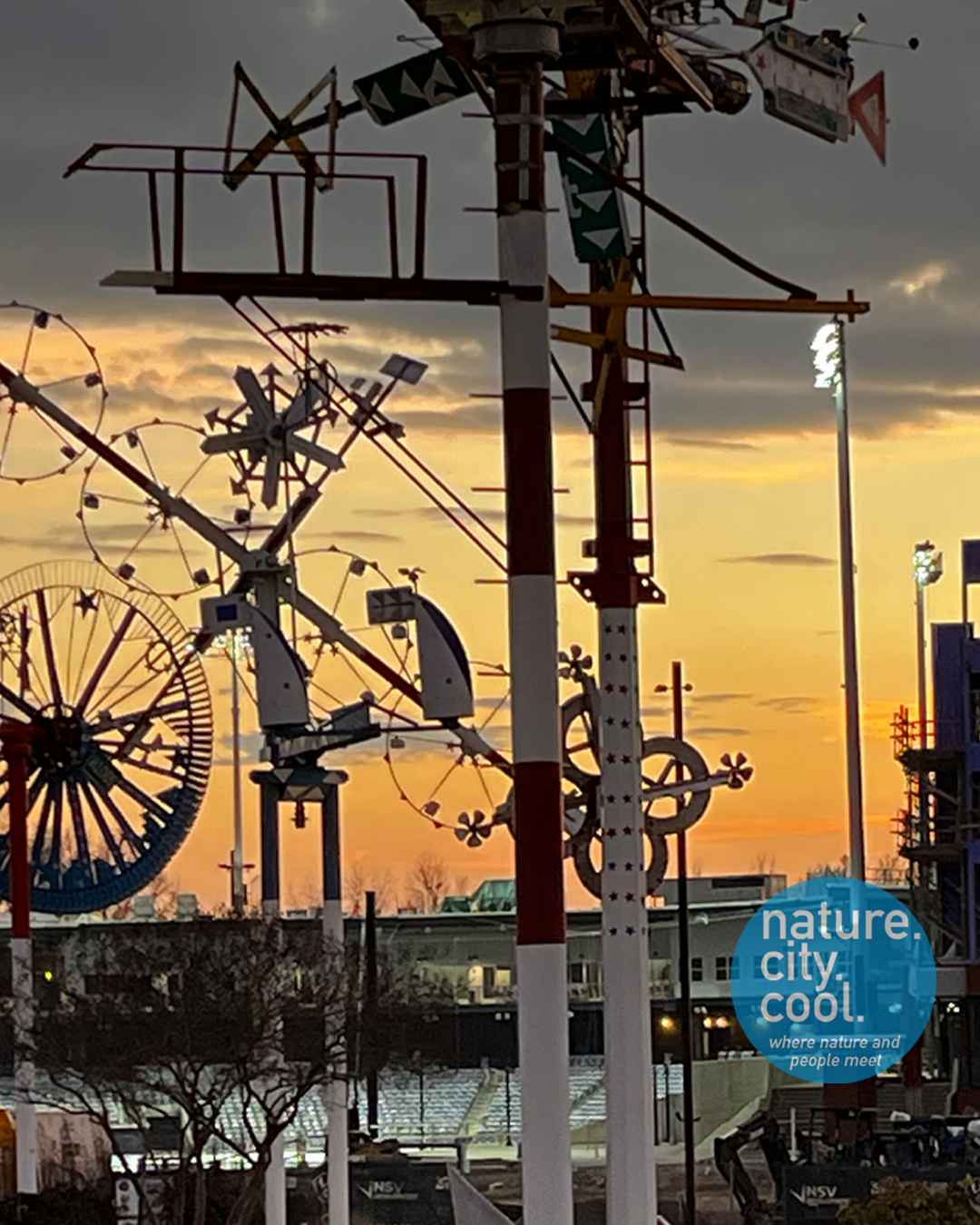
Vollis Simpson Whirligig Park in Wilson, North Carolina echos the town’s agricultural past, with rows and patterns reminiscent of tobacco fields and auction warehouses, the sculptures are spaced generously, leaving room to walk, sit, or simply watch.
Some public spaces ask for attention. Others quietly earn it.
Whirligigs are a powerful lesson in reuse and resilience
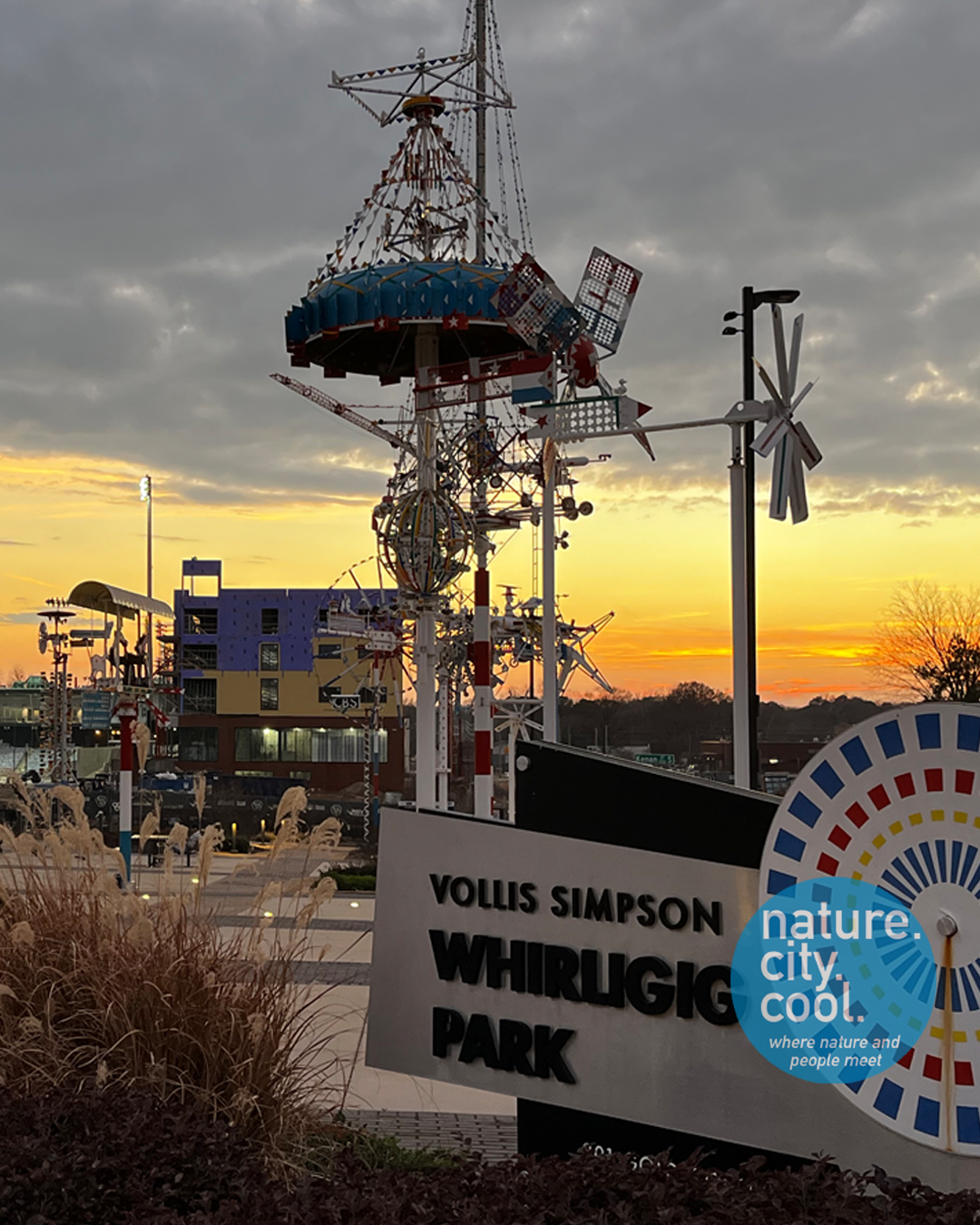
Vollis Simpson Whirligig Park, designed by landscape architecture firm Surface678
The whirligig sculptures created by Vollis Simpson are a wonderful example of a cool place and project in a public place.
They rise from the ground like machinery that decided to slow down. Nothing is plugged in. Nothing is automated. Wind does the work, and every breeze changes what you see.
At Vollis Simpson Whirligig Park, designed by landscape architecture firm Surface678 to echo Wilson’s agricultural past with rows and patterns reminiscent of tobacco fields and auction warehouses, the sculptures are spaced generously, leaving room to walk, sit, or simply watch. People move through without hurry. Some stop to enjoy and reflect.
It’s public art that feels less like a destination and more like shared ground.
Sustainability can begin with unique local features, restore or reimagine them, and create a thriving and inviting future built on their enduring value.
Before sustainability had language, it had habits.
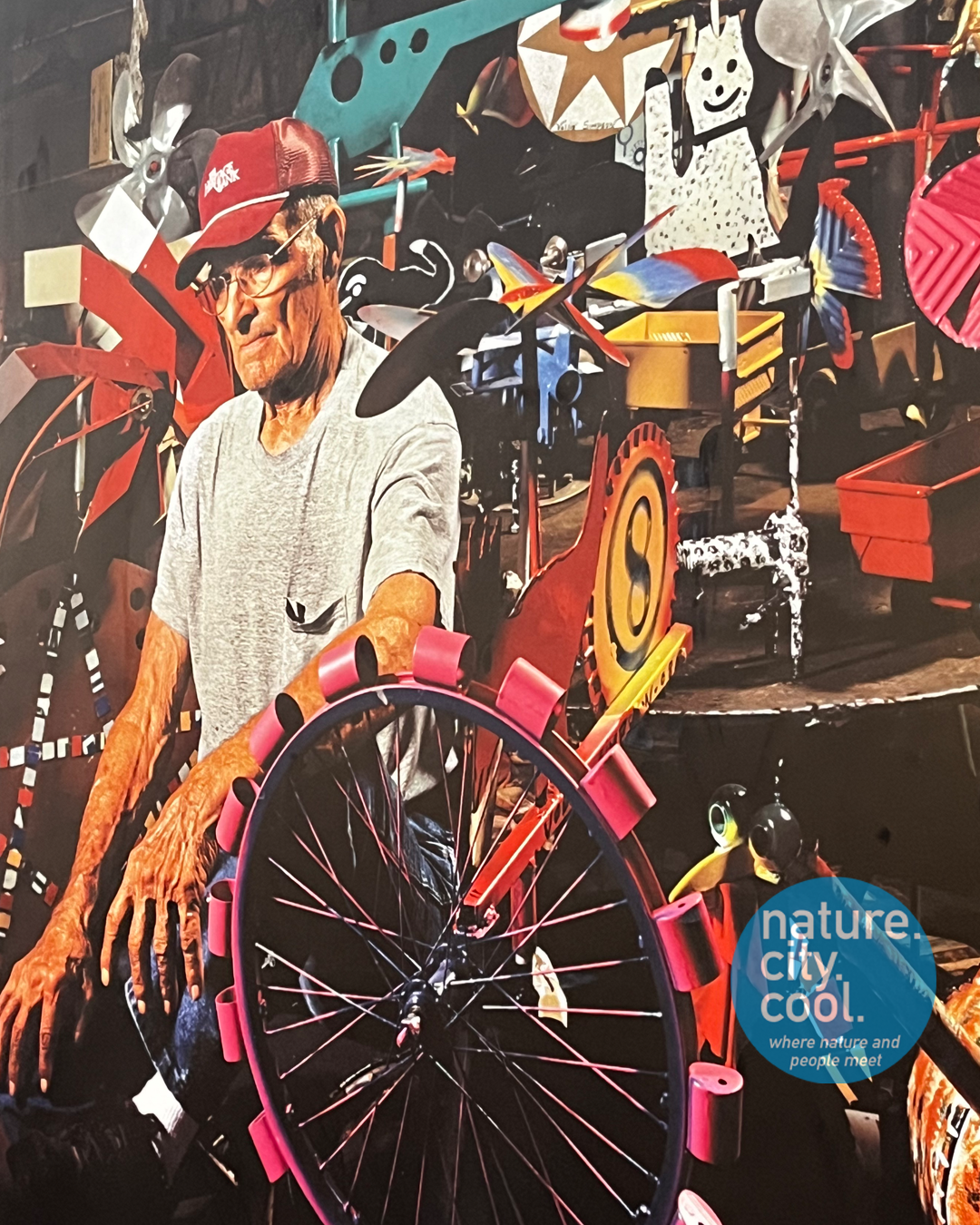
Vollis Simpson, the man behind the motion
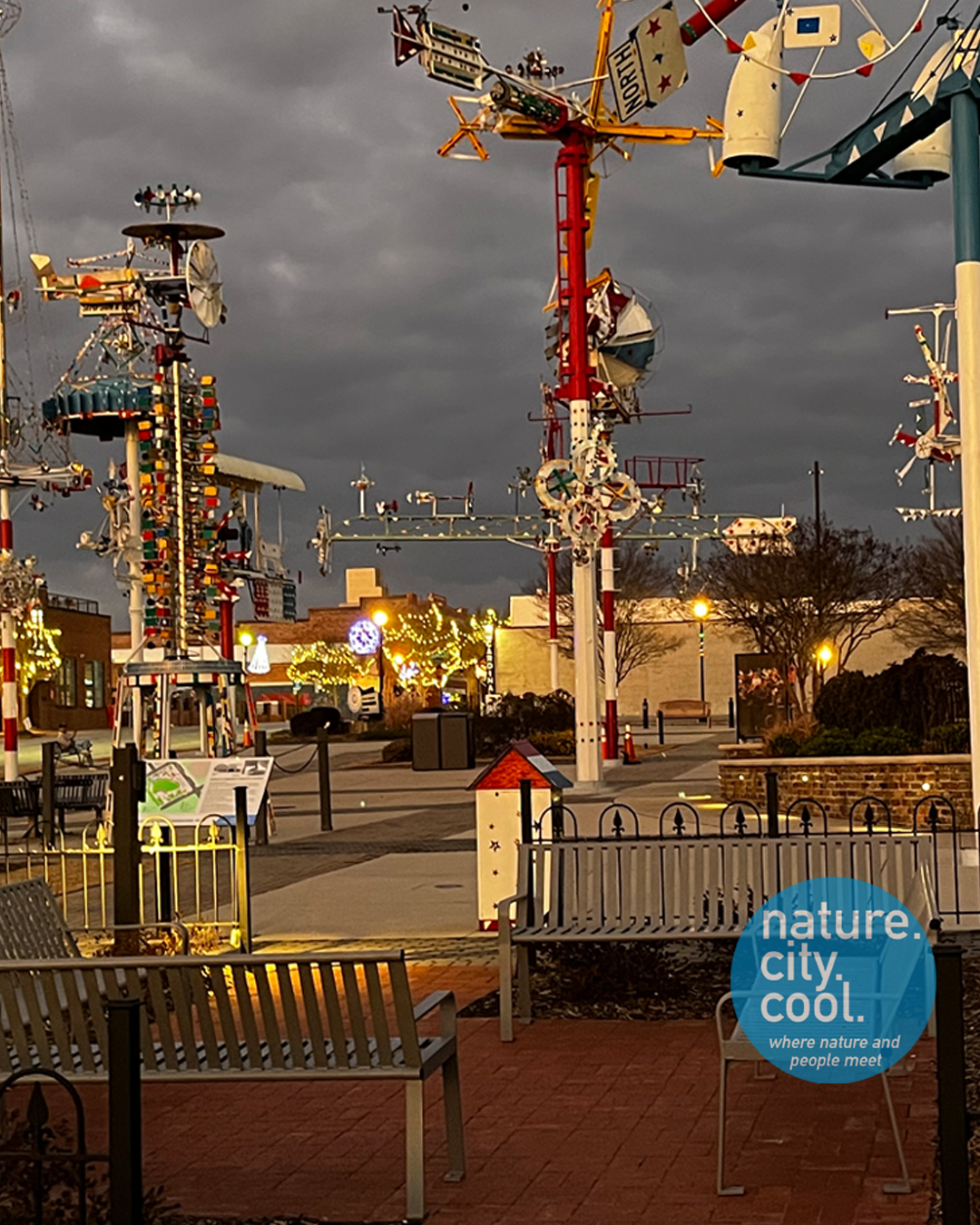
The sculptures are spaced generously, leaving room to walk, sit, or simply watch
Vollis Simpson did not set out to make art. He repaired machines for a living and saved parts that still worked—road signs, fans, metal scraps—things other people were finished with. When he retired, he began assembling them into large wind-driven structures on his farm near Wilson, North Carolina.
These structures, known as whirligigs, weren’t designed for efficiency or perfection. They were designed to move, to last as long as they could, and to be fixed when they broke.
Long before sustainability had a formal language or specific metrics, the practices were already there: reuse what you have, repair what you can, celebrate what’s special and let nature continue to supply the energy.
Some sustainable ideas need a creative and enduring foundation.
What began on a farm outside Wilson, North Carolina didn’t stay there.
Whirligigs now stand in museums and public spaces across the country—in places like Baltimore, New York, and Raleigh at the American Visionary Art Museum, the North Carolina Museum of Art, the American Folk Art Museum, and more—carrying the same ideas with them: wind-powered motion, salvaged materials, and a refusal to waste what still has value.
But the heart of the work remains in Wilson, where the community chose to preserve, restore, celebrate and build on the art in the Vollis Simpson Whirligig Park.
The sustainability of the whirligigs isn’t just in what they’re made of. It’s in the decision to care for them, maintain them, and keep them part of everyday life—rather than letting them disappear when they became inconvenient. These unique pieces of art are the foundation for the future vitality of downtown Wilson and the identity of the community itself.


Tell us about that favorite spot. What’s the vibe that makes it so awesome? What’s fueling all that good energy?

Share insights from your experiences of designing, enhancing and transforming cool sustainable places.

Join the conversation. Keep up with the latest new stories, ideas and discussions.